September 2023
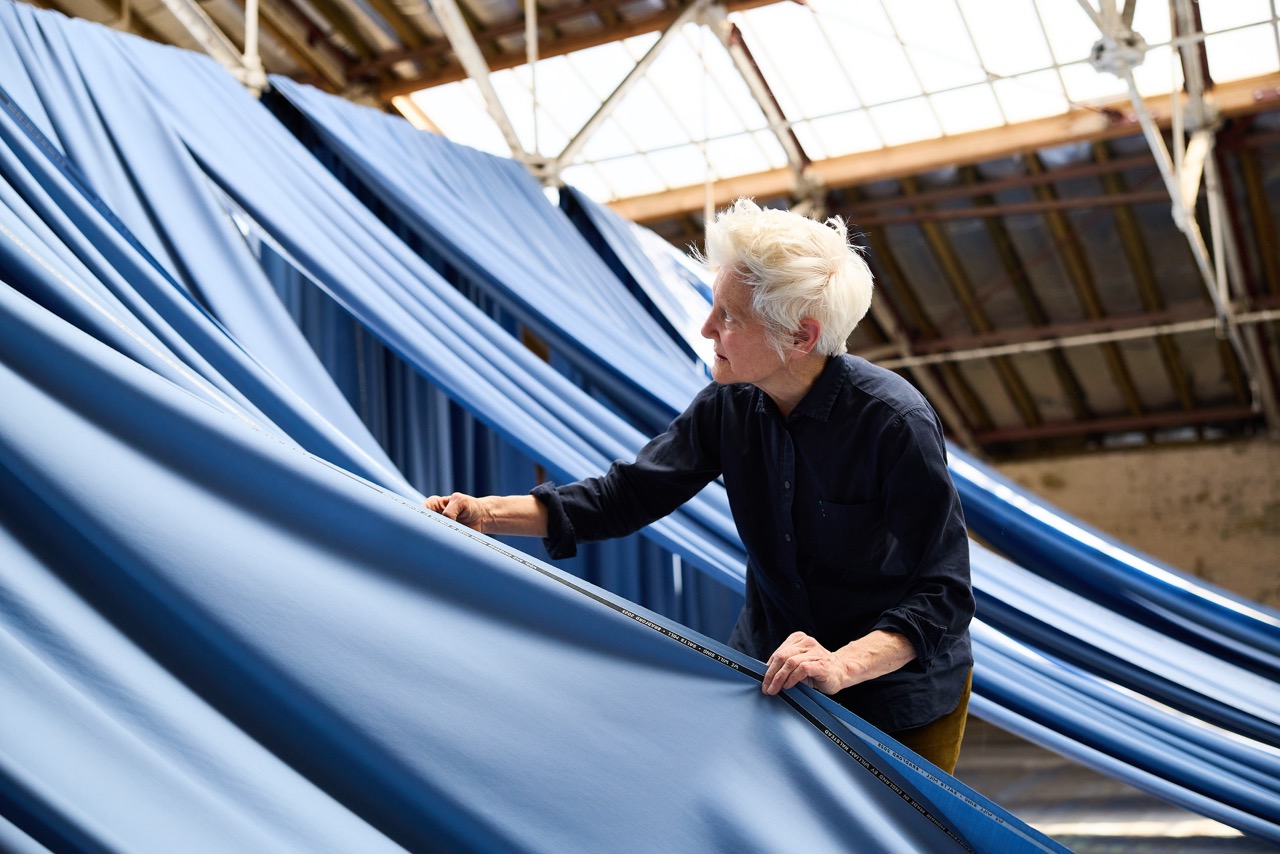
Installation completed at Oregon State University's Cordley Hall
Corvallis, Oregon

Fabrication: Western Interlock
Installation: Sequoia Stonescapes
Images by Nathan Wright

September 17, 2023 - January 21, 2024
Woven Histories: Textiles and Modern Abstraction
Los Angeles County Museum of Art

Woven Histories: Textiles and Modern Abstraction foregrounds a robust if over-looked strand in art history’s modernist narratives by tracing how, when, and why abstract art intersected with woven textiles (and such pre-loom technologies as basketry, knotting, and netting) over the past century. Although at times unevenly weighted, the diverse exchanges, alignments, affiliations, and affinities that have brought these art forms into dialogue constitute an ongoing if intermittent narrative in which one art repeatedly impacts and even redefines the other. In short, the relationship between abstract art and woven textiles can best be described as co-constitutive, and their histories as interdependent. With over 150 works by an international and transhistorical roster of artists, this exhibition reveals how shifting relations among abstract art, fashion, design, and craft shaped recurrent aesthetic, cultural, and socio-political forces, as they, in turn, were impacted by modernist art forms.

July 15 - October 5, 2023
Ann Hamilton • as after is before
'T' Space Gallery

Exhibition opening & poetry reading by Ann Lauterbach
3 - 5 PM, July 15
RSVP FOR OPENING HERE

Moving Star Performances
1 - 4 PM, July 22 & 1 - 4 PM, July 23
Moving Star members Emily Eagen, Mark Ettinger, Saskia Lane, and Onome will come together to create an improvisatory vocal response to and with the installation in ‘T’ Space and the surrounding woodlands, no RSVP needed.

'T' Space Gallery
125 1/2 Round Lake Road
Rhinebeck, NY 12572

Public Opening 2 - 4 PM, Saturday April 29, 2023
Kahnop • To Tell A Story by Ann Hamilton
with Yeechesh Cha’alk by Dr. Alexandria Hunter and Eva Trujillo

The Stuart Collection, UC San Diego

REGISTER HERE


The Stuart Collection’s newest addition has been likened to an “ocean of words.” The 800-foot-long pathway created by Ann Hamilton features 1,300 quotes from an estimated 300 sources connected to UC San Diego. Some words are raised like a rubber stamp, while others are engraved into the basalt stones. The work also includes a feminist poem called "Yeechesh Cha’alk" ("A Woman’s Heart"), written by two of the university’s scholars, Dr. Alexandria Hunter and Eva Trujillo, to honor the regional history of the Kumeyaay Nation.

4 PM, Saturday April 22, 2023
Radius Books presents Ann Hamilton at SITE Santa Fe 
Ann Hamilton: Sense | Artist Talk + Book Signing | Santa Fe, NM

REGISTER HERE

4 to 6 PM, Saturday, April 22, 2023

SITE Santa Fe
1606 Paseo De Peralta (auditorium entrance, east side of building)
Santa Fe, NM, 87505
United States

Radius Books is pleased to launch our new title Ann Hamilton: Sense with a live artist talk at SITE Santa Fe. Hamilton will give a presentation followed by Q&A with Nick Larsen and David Chickey, whose studio assistance and aesthetics were integral to the development of the book. Attendance is free and open to the public, but space is limited so we ask that you register in advance.

February 11 – April 29, 2023
Process + Place: Ann Hamilton, here • there • then • now
500 Capp Street & Headlands Center for the Arts

500 Capp Street Opening Reception: February 11, 2023, Saturday 12-5pm

On the occasion of Headlands Center for the Arts’ 40th anniversary in 2022, Headlands joins 500 Capp Street for a project created by Ann Hamilton sited in both locations that highlights the deep connection between the two spaces and their shared stories of material and discovery.
At Headlands, artists David Ireland, Mark Thompson, and a team of collaborators transformed and opened the cluster of former military buildings to artists in 1986, creating an architectural condition that amplified and extended the vocabularies Ireland developed in his ongoing living project on Capp Street. Within this framework, Hamilton responded to these conditions in her 1989-1991 renovation of Headlands’ Mess Hall, transforming the space into a comfortable and inviting gathering place where meals are shared, collaborations are inspired, and creative revelations arise. Also in 1989, Hamilton was in residence at Capp Street Project with an installation entitled Privations and Excesses.
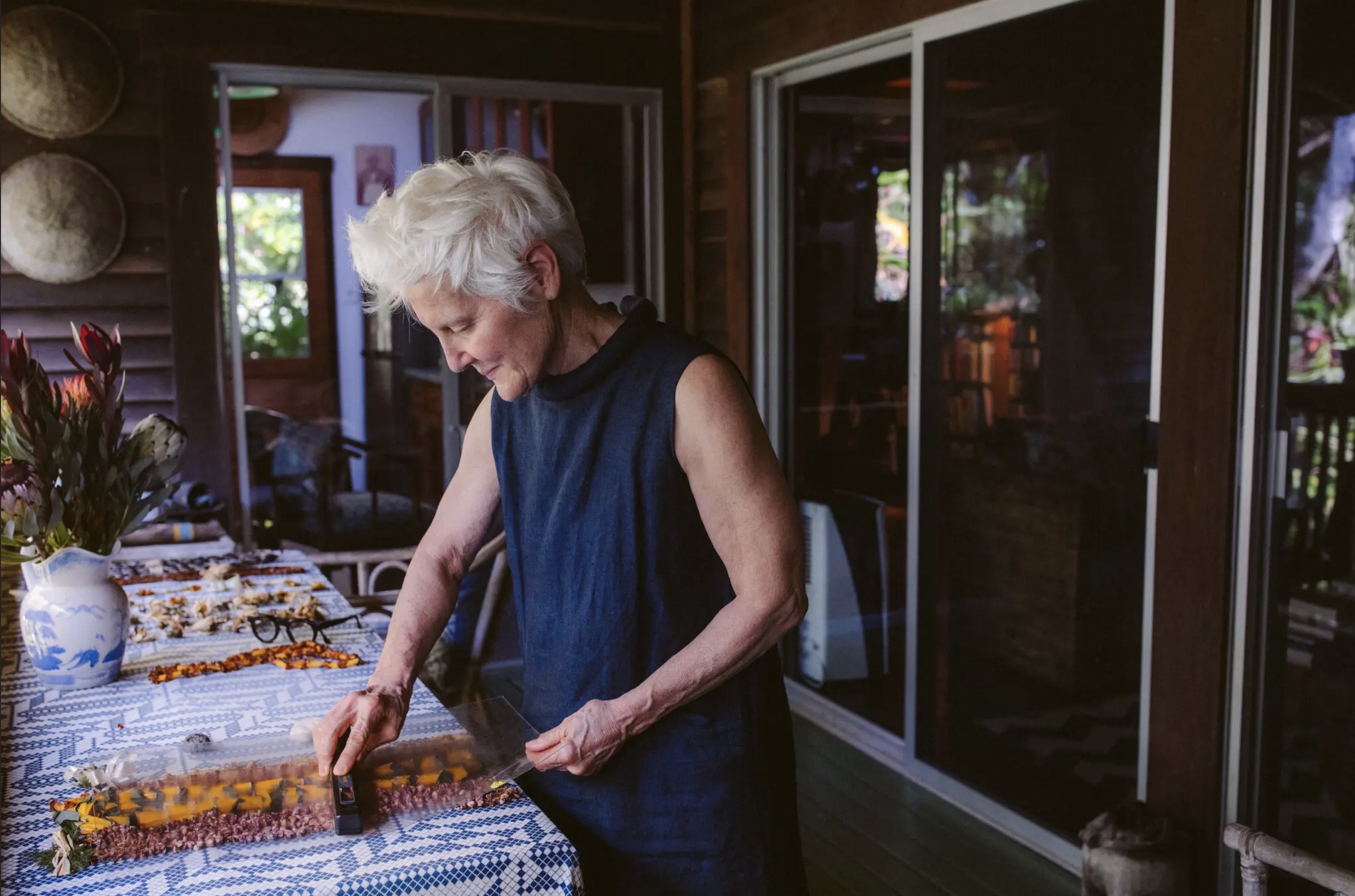
Now, Hamilton returns to both sites for here • there • then • now, reaching across time and place to form an engagement, reflection, and response. During a research residency at 500 Capp Street in November 2022, Hamilton selected objects from Ireland’s practice, exploring the typology of their forms and materiality, and scanned each to create luminous images that will be on display along with a newspaper print that will be available as a free, take home memento.
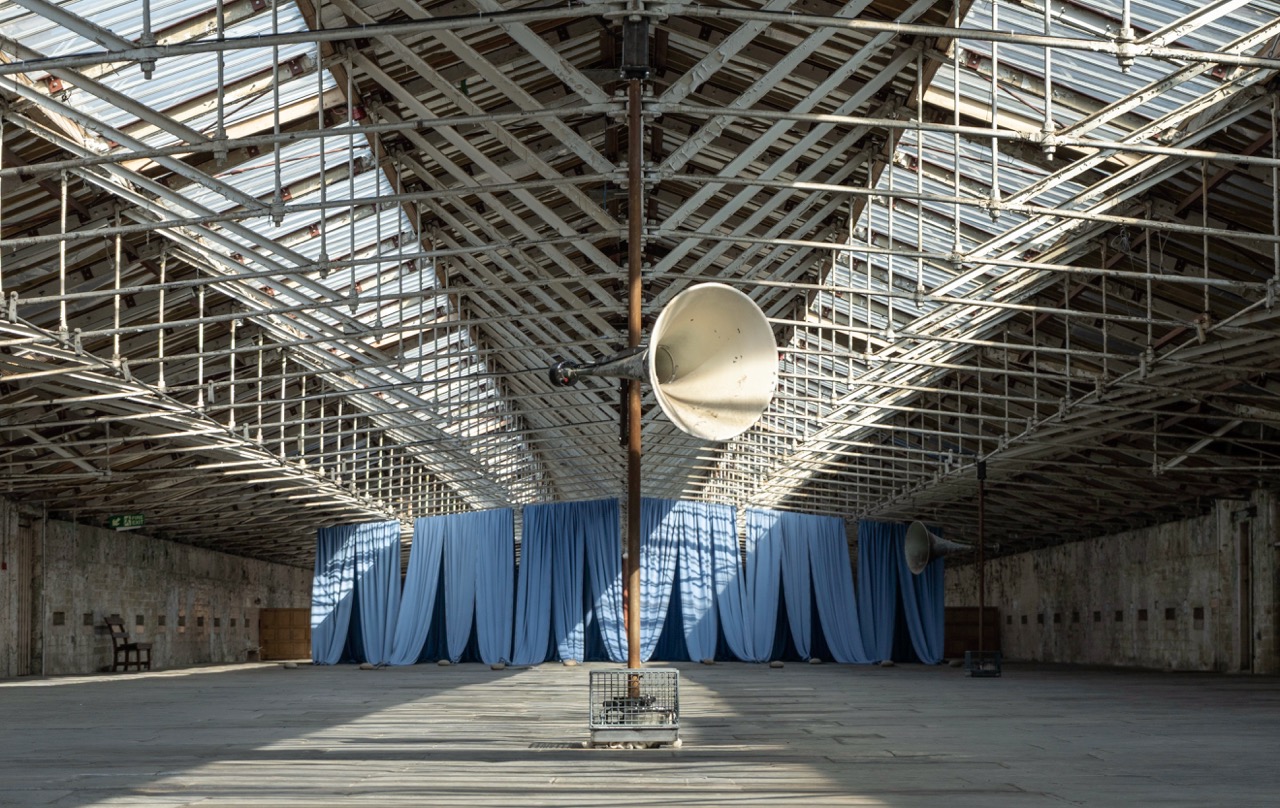
Further connecting the domestic scale of 500 Capp Street with the institutional scale of Headlands’ studio buildings, Hamilton is developing a sculptural audio element that will call across the distance to connect the near at hand with the far away—a pulse, connection, collaboration reaching across time, then and now.

Process + Place : Ann Hamilton, here • there • then • now, will have satellite installation at the Headlands Center for the Arts on view from February 12 to March 19, 2023, at Building 944, 944 Simmonds Road, Sausalito, CA 94965.

January 2023
SENSE
Radius Books

Ann Hamilton has, throughout her practice, used videos and still images as part of her larger installation works, though they have rarely been the singular focus of a project. This publication brings together vocabulary from four bodies of image-based work produced over the last five years and includes photographic portraits as well as lensless contact scans of ornithological taxidermy, fabrics and garments, and objects from various personal and institutional collections. Reprocessed through multiple printings on tissue Gampi and newsprint, the images emphasize the tactile nature of their substrate and Hamilton’s material hand. The work’s physical presence is reinforced by the textured surface of the book’s pages and scale shifts. This volume thus becomes an art object of its own; repetition, the atmospheric nature of the images’ shallow depths of field, and the intuitive connections made between different bodies of work create an almost filmlike cadence that renders the felt qualities of touch.

documentation: Lindsey Kennedy, © Radius Books

December 2022
Ann Hamilton: Sense
The Brooklyn Rail, contributing writer Nolan Kelly

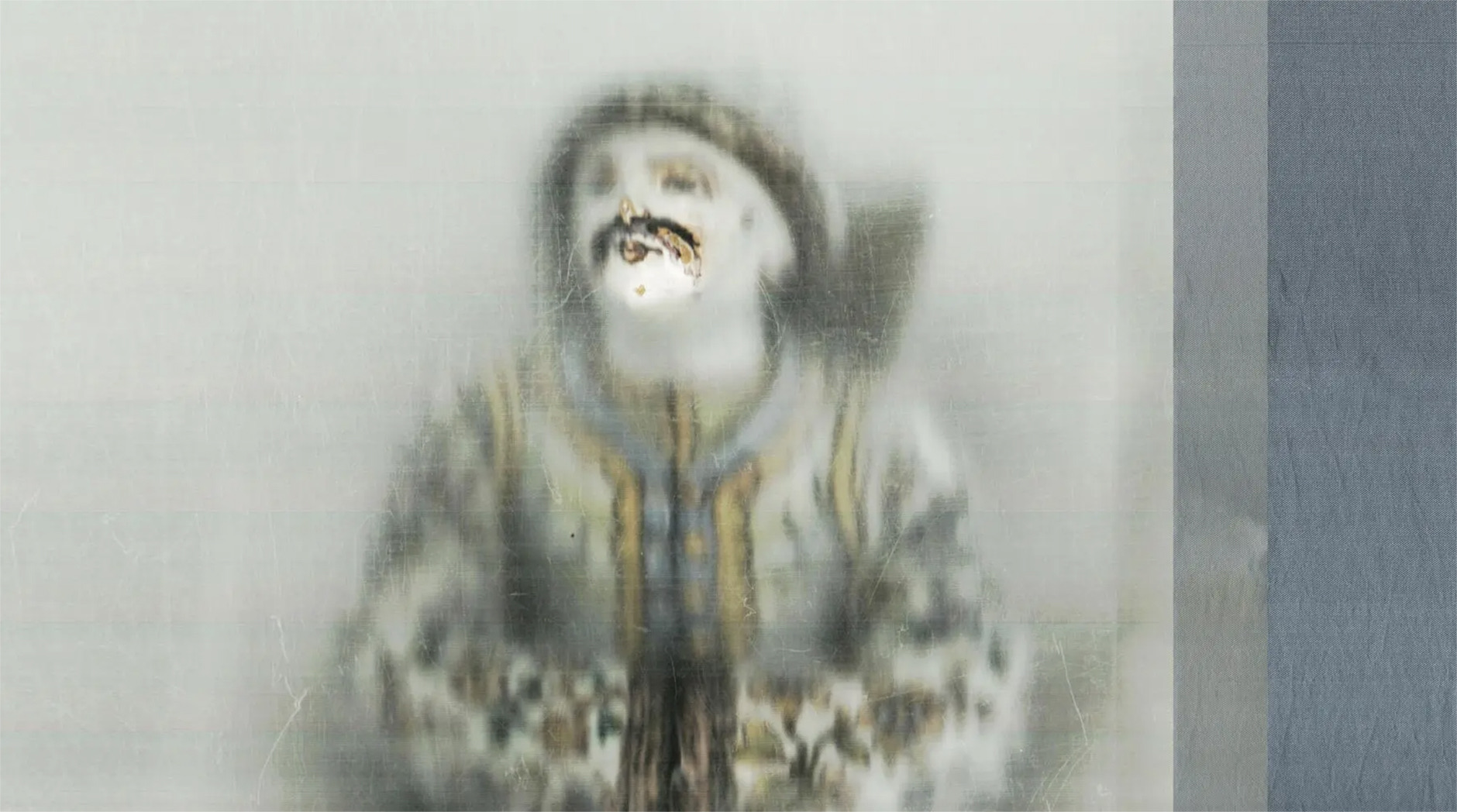
Ann Hamilton, Side-by-Side · Ivory Figurine l, 2018. Archival pigment print on gampi paper, cloth backed, 78 3/4 x 102 inches. Courtesy the artist and Elizabeth Leach Gallery.

"For much of her career, Ann Hamilton has focused on cultivating environments that reorient the attentions of the people inside of them, providing sensual, probing focus to the textures of everyday life. Her landmark exhibitions at the Guggenheim, Park Avenue Armory, and Seattle’s Henry museum often involved carefully orchestrated sounds and smells in addition to live performances and site-specific impositions that transformed galleries into chthonic chambers. But the drawback of installation art is that it does not last. Live canaries, candle-licked walls, floors of struck pennies, and piles of neatly folded clothes make for a sumptuous sensory experience when placed in concert, but transform back into common objects outside of Hamilton’s constellated effect. The problematics of iteration go beyond simple logistics of site-specificity, or even the marketability of conceptual art, to the heart of human attention and its capacity for embodied presence. Still working entirely with everyday objects, Hamilton’s recent work has seemed less interested in exuberant combinations than in quiet contemplation, a way of winnowing a transcendental experience down to its core details...." -Nolan Kelly

Read the full review here

November 3 - December 30, 2022
Ann Hamilton - Sense
Elizabeth Leach Gallery
Portland, Oregon
Artist Reception: Wednesday, November 2, 5:30-7:30 PM
First Thursday: November 3, Artist Talk, 5PM, Reception, 6-8 PM

Elizabeth Leach Gallery is pleased to present the second solo exhibition with Ann Hamilton. Featuring unique paper and cloth prints and collages, this new work is conceived in conjunction with the upcoming release of Hamilton’s publication with Radius Books and shares its title: Sense. ⁠

a book ball from Ann Hamilton's installation lineament

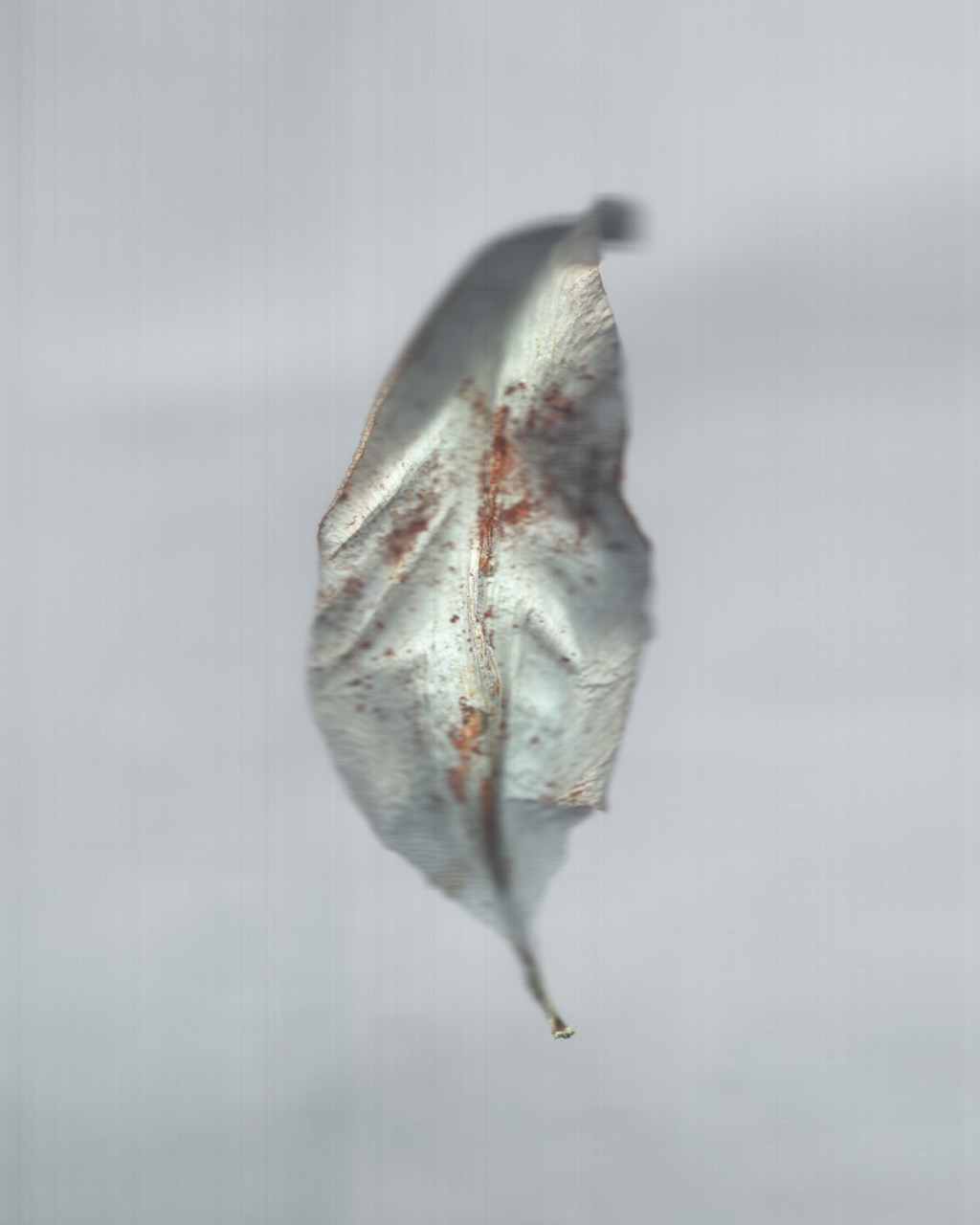
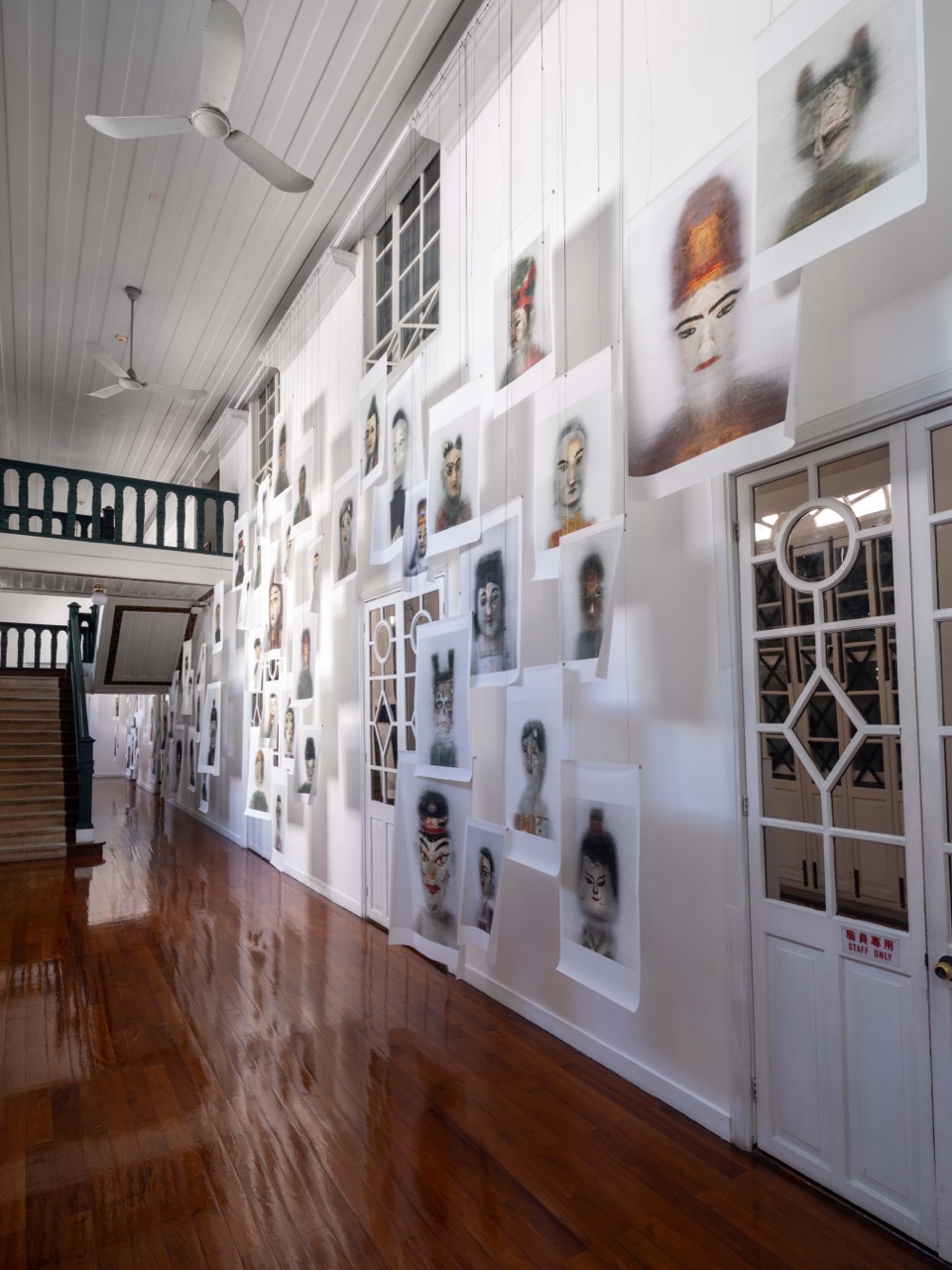
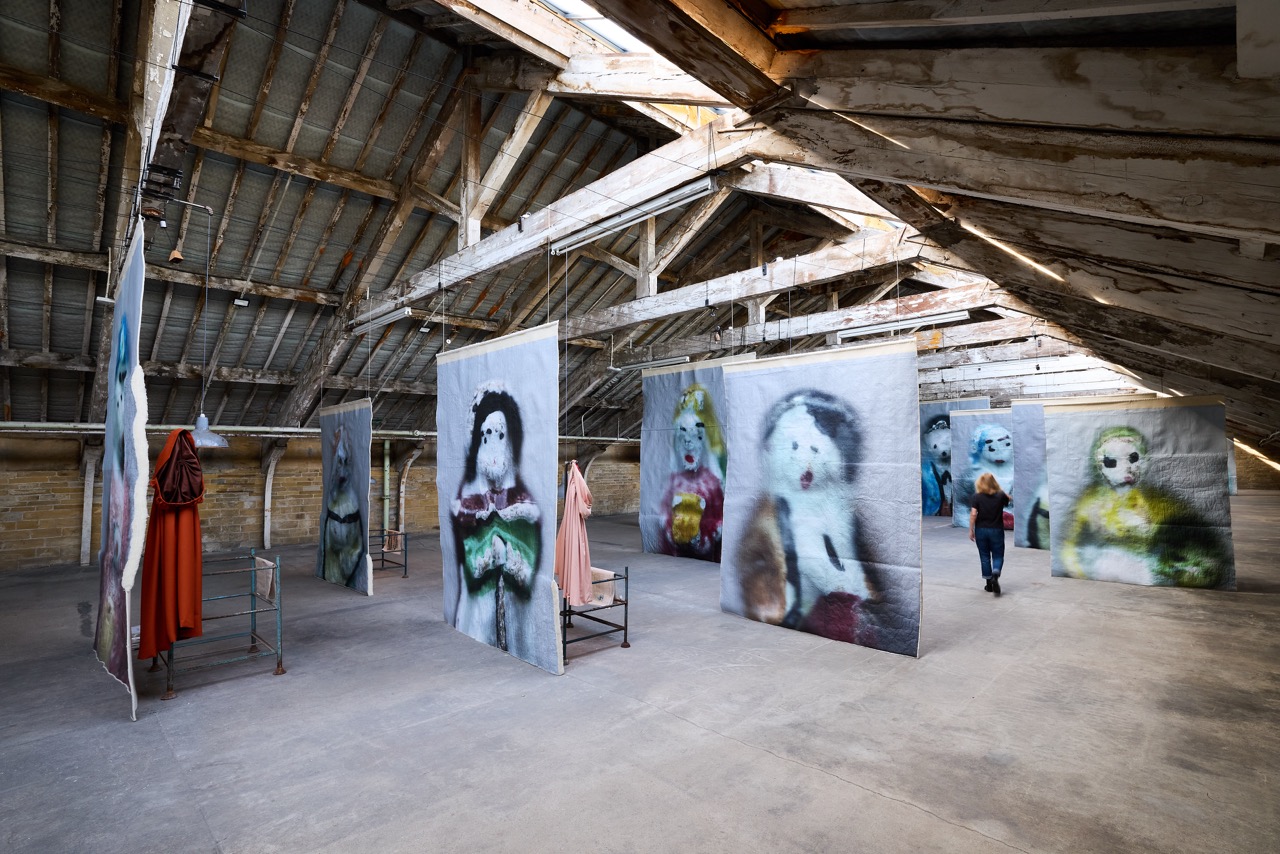
While Hamilton is best known for the material surround and tactility of her large, site responsive installations, this recent body of work focuses on the photographic and evolves from processes developed over the last decade working with shallow depth of field flatbed scanners and occluding membranes to image animal specimens, stones, fallen leaves and people. Most notably, in her exhibition, the common SENSE, at The Henry Art Gallery in Seattle. In describing the work Hamilton has written: “Sense is contact, is the touch of human and non-human animals, is the fold of woven cloth, is words in fragments and in woven lines and like all making comes from acts of attentions, both finding and composing, touching and being touched.” The shallow focus of the fallen leaves and bird study skins installed in the front gallery detail and magnify where skin and leaf make contact with the scanner glass and shadow where they bend and lift away. The simultaneous detail of focus and blur, of proximity and distance creates a felt sense of each specimen as it folds, curls, bends and dries in its individual and unique way. The images, printed on tissue weight Japanese gampi paper, mounted to cloth and suspended from metal rods form a scroll-like landscape and surround, fully filling the gallery walls.
Hamilton’s practice has long explored the relation between text and textile and the interior second gallery exhibits her more intimate collage work and ongoing series pages. In these new diptychs and triptychs the color, opacity and transparency of cloth fragments meets the abstractness of language sifted from loose fragments of sliced books, themselves the residue of another project. Mounted to book endpapers, these singular words and phrases, the textile’s imperfect geometric shapes, and the delicately unraveled threads are simultaneously commonplace and lyric.

October 18 – December 4, 2022
Being Theoria: the 4th Hangzhou Triennial of Fiber Art
Zhejiang Art Museum
Hangzhou, China

There is a “cosmotechnics” inherent in Mì/Sī, the radical for “silk” in the Chinese language, such as the archetypes in conceptions of “relation”: clue(Xiànsuǒ), organization(Zǔzhī), web/network(Wǎngluò), system(Xìtǒng); the general name of colours: red, green, purple, scarlet, crimson; and “Wén”, which means, together in one word, text, texture, culture, and civilization. These come from the form of silk since the time of ancient China, alert us that fiber/textile is the basic construction of the world, as well as the phenomenon of and universal metaphor for human thought.
Drawing inspirations from fiber/textile, the curatorial team of the 4th Hangzhou Triennial of Fiber Art propose the term “Huǎn Cún Zài” to suggest a redefinition and a re-interpretation of “art”: the way “art” occurs and exists is a kind of “theoria-being”.
This is echoed in the English translation, “Being Theoria”, which itself derives from Aristotle’s “theoria” (contemplation) from the time of ancient Greece. Poesis(techne)/praxis/theoria come from the “three activities” categorized by Aristotle. “Being Theoria” reacts to the divide between art emphasizing production (techne) and art emphasizing participation and intervention (praxis) today.
There is also an intertextuality between the Chinese and the English titles. “Huǎn Cún Zài” is a combination of two words: huǎncún (cache) and cúnzài (being). Huǎn means slow, moderate, or postponed; it belongs to the radical of Mì. Meanwhile cúnzài is the equivalent of the philosophical term “being”. Huǎn Cún Zài could be understood as “postponed-being” or “cached-being”, and huǎncún is the translation of “cache” in computerese but could literally mean “storing/existing slowly”, which is the daily life situation of the pandemic.
From the initial moment, the curatorial team has defined itself as “weavers", inviting artists and scholars to join in and establish connections, and form a network of Research Weavers responding to a reflective fiber-world. The triennial is not segmented but linked up through several “clues”, viz. characters with the silk radical: “Wén” (text/texture/culture/civilization), “Xù” (emotion/thought), “Xiàn” (lines/trajectory), “Zhī” (weave/labor), “Wǎng” (net/web), “Jié” (tying knots), and “Zōng” (diversity/complexity). These clues are intertwined in space and are presented as a series of immersive “Theoria Space” for people to linger in and meditate. The notion of the city project “Jingyin | Pure Reason” draws from the Buddhist doctrine “Jingyin” (literally, pure cause [hetu]) as well as Kant’s “Pure Reason”. It extends “Being Theoria” and the boundary of fiber art, forming a cross-civilizational dialogue via an ongoing curatorial and artistic weaving.⁠

a book ball from Ann Hamilton's installation lineament

June 2022
Emergence Magazine
Volume 3: Living with the Unknown

What does living in an unfolding apocalyptic reality look like? Volume 3: Living with the Unknown explores this question through four themes—Initiation, Ashes, Roots, and Futures—moving from the raw unknowing of transformation to a place of rooted possibility. The stories in this edition offer what we hope can be a light in the darkness as we transition into the next chapter of our collective future and embrace the reality of living with the unknown.⁠

a leaf from the series fallen by Ann Hamilton

April 2020
O N E E V E R Y O N E • Ohio
Ann Hamilton
Music by Bill Frisell

click here to watch on Vimeo

The newsprint book in this video, made for sesquicentennial celebrations at The Ohio State University, is part of an ongoing public art project, O N E E V E R Y O N E. Thick as an old phone book, its 1,200 pages are filled with images of people photographed behind a translucent membrane that renders in focus only those points where the body touches the material surface. Hidden, but revealed by touch, the resulting portraits hold a sense of privacy and intimacy not possible in a time when we are so aware of every point of contact, of every surface we touch, or are in exchange touched by. These figures, isolated and ethereal, are perhaps the alone together we are living in this moment.

I called jazz guitarist Bill Frisell to ask if he might consider making a house recording for a video of the book. Bill has performed at the Wexner Center many times, and his music always stirs a deeply felt place in me, a place I might now call HOPE. It was April; I was in Ohio, and Bill was in New York. Bill’s sound for the video is our collaboration, our form of touch across the physical distance between us.

The people pictured in the book are students, faculty, staff, and other members of the Ohio State community who offered to participate in the project. We staged the photography set-up in two main campus arteries, the Thompson Library and the Wexner Center for the Arts, who collaborated in support of my fall 2019 exhibition project when an object reaches for your hand.

A human impulse is to extend our hands outward, to know the world through the reciprocity of touching things. It’s become impossible to pass this book, made to celebrate the University’s Sesquicentennial, from hand to hand. Nonetheless, this video, which shares a turning of its pages, now affords a different form of celebration. Listening closely to Bill’s music, you will sometimes recognize the melody of OSU’s beloved Alma Mater “Carmen Ohio” and, perhaps, feel us standing arm in arm across our distances, to sing the bond that makes us The Ohio State University.

Special thanks to Phyllis Oyama, Michael Mercil, Katie Hall, Ken Aschliman, and Chuck Helm

To my studio: Kara Gut, Jessica Naples-Grilli, and Nick Larsen, along with graduate students Dareen Hussein and Nalani Stolz

The work is made possible by The Office of the President at The Ohio State University, the Thompson Library, and the Wexner Center for the Arts.


Additional Works on View

A SONG FOR WATER
with De Wakpa Taŋka Odowaŋ / Song for the Mississippi River (2018)
by Gwen Westerman
A commission of Destination Medical Center, Heart of the City

De Wakpa Taŋka Odowaŋ / Song for the Mississippi River (2018)
by Gwen Westerman

Project Credits
Artist: Ann Hamilton
Ann Hamilton Studio Project Managers: Nick Larsen, Kara Gut
Poet: Gwen Westermann
Curator: Hesse McGraw, El Dorado, Kansas City
Landscape Architecture: Coen and Partners, Minneapolis Fountain Design: Fluidity Design Consultants Los Angeles Fabrication: Quarra Stone Company, Madison

Commissioned by MTA Arts and Design, CHORUS is a monochrome marble mosaic of raised text. Phrases excerpted from the preamble to the 1776 United States Declaration of Independence intersect with the occurrence of the same of words in the 1948 United Nations Declaration of Human Rights to form the horizontal lines on the Southbound platform. The composition of the Northbound platform crosses the word, EVERYONE, and its occurrences in the Declaration of Human Rights. Woven together in a field of repetitions, the words form an underground refrain that speaks to the civic ideals and aspirations foundational to the quality of life above.

[learn more about CHORUS]